
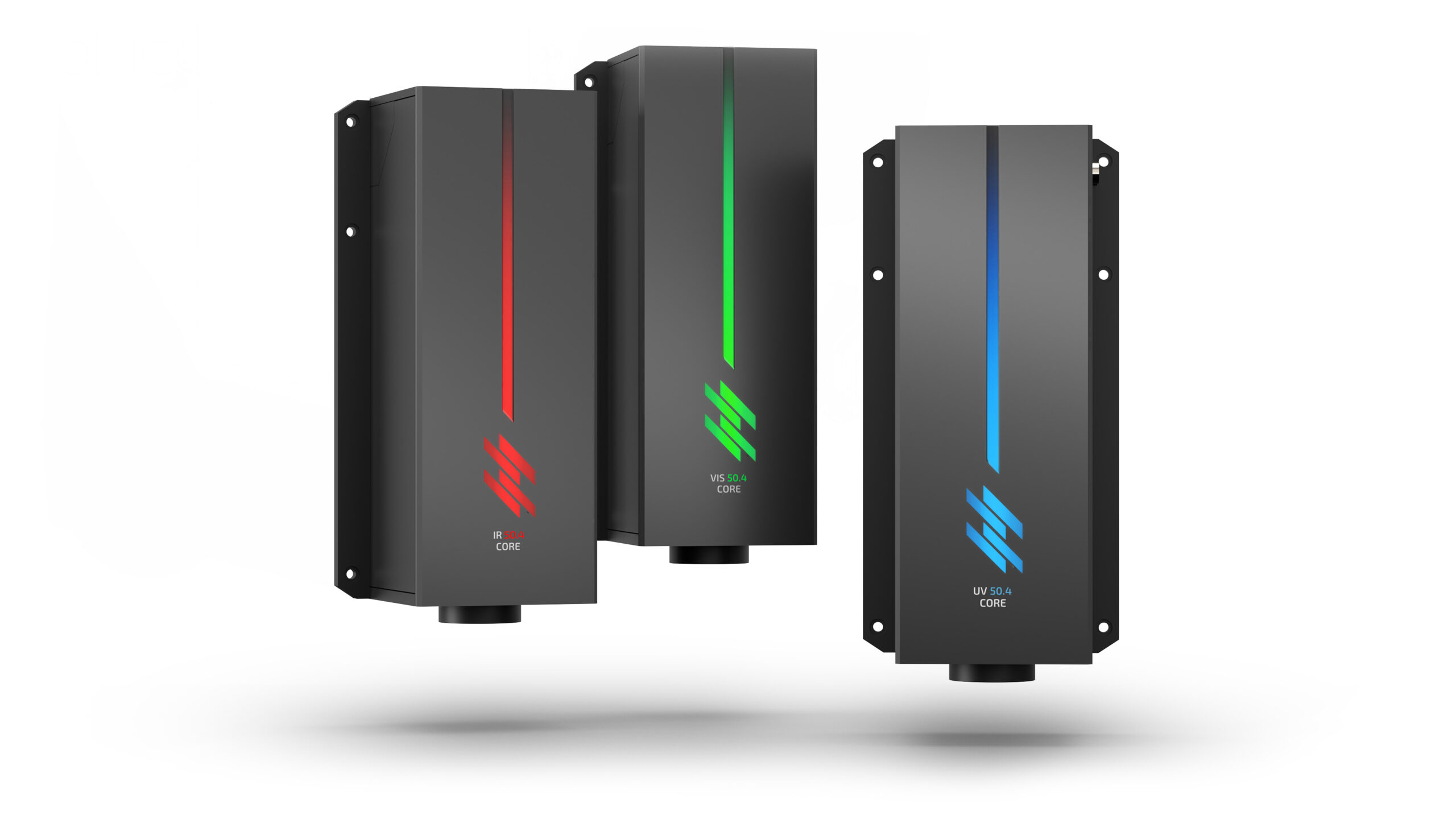
CORE
Highly flexible interference modules for 2- and 4-beam patterns, IR to UV.
- Structure size
- 0.5 to 12.0 µm
- Working distance
- 20 to 35 mm
- Weight
- 3.5 kg
Our DLIP modules split one laser into interfering beams and write micro-structures straight into the surface. Self-cleaning solar glass, anti-icing wings, antibacterial implants. No coating, no chemicals.
Where two laser beams overlap, light and dark fringes form. The surface only changes under the bright fringes, so one pulse leaves a pattern far finer than the beam itself.
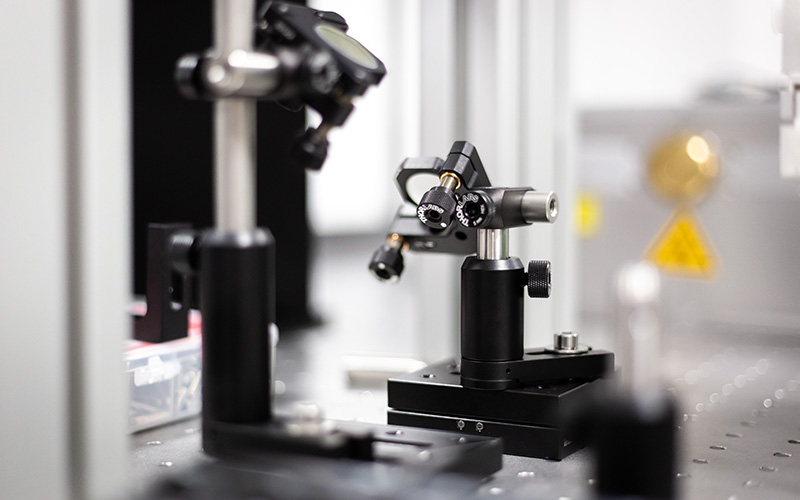
The CORE module splits one pulsed laser and lets the beams cross on the part.
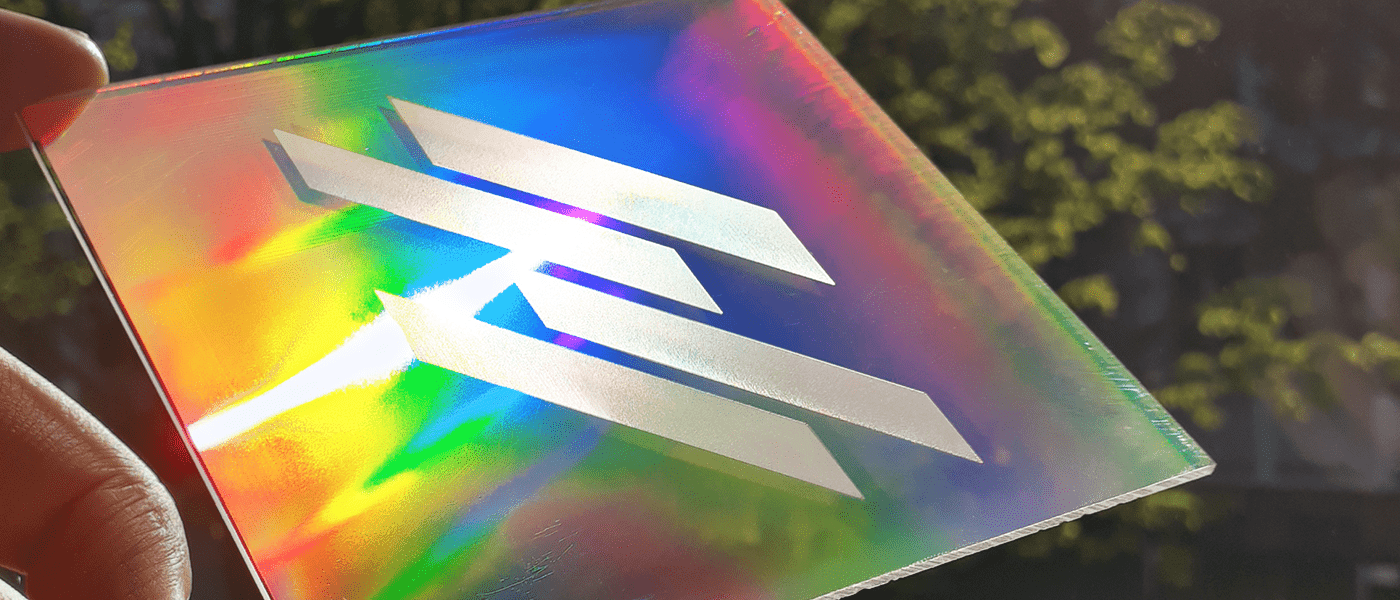
Only the bright interference fringes change the surface, so one pulse leaves a pattern far finer than the beam.
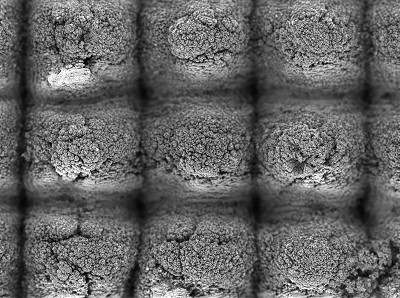
Typical structure periods from 0.3 to 30 µm, chosen in software for the function you need.
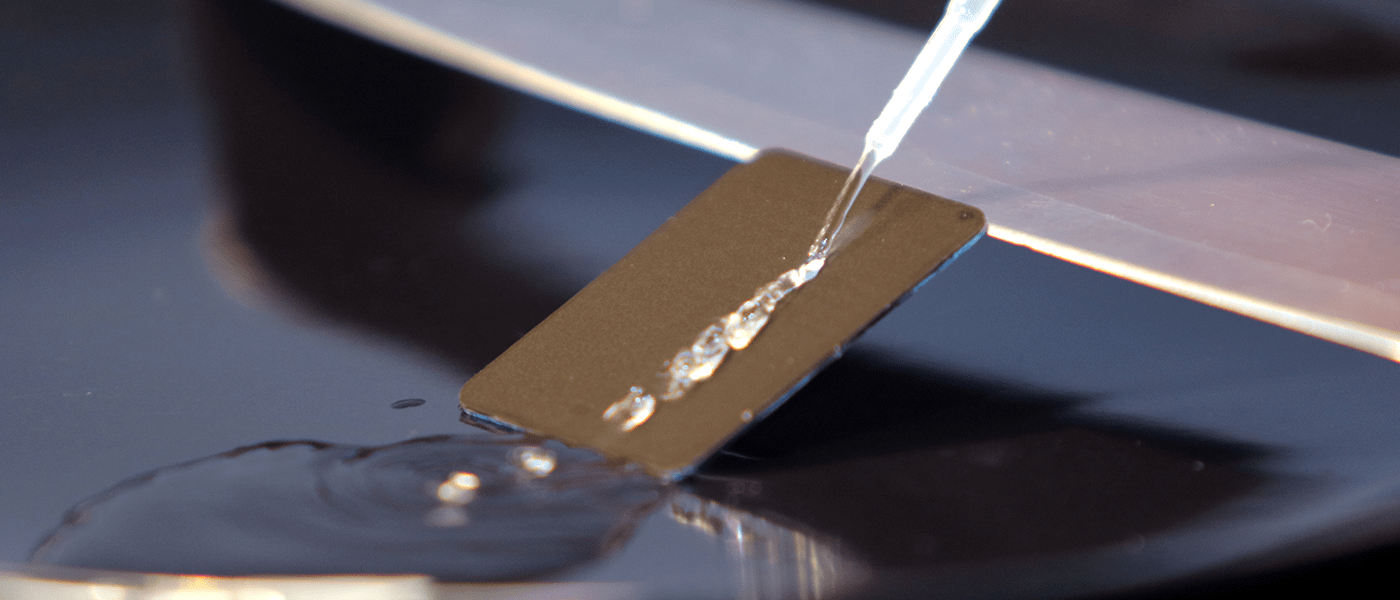
Water-repellent, self-cleaning or antibacterial, from geometry alone. No coating, no chemicals.
Lotus leaves, shark skin, collembola and butterfly wings get their function from structure, not chemistry. DLIP copies the geometry onto technical parts.

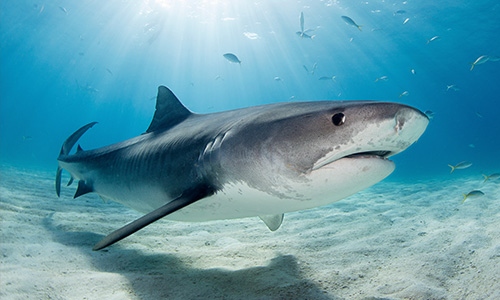
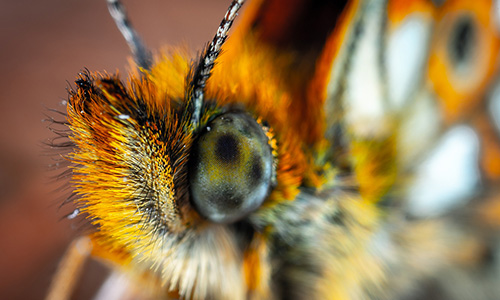
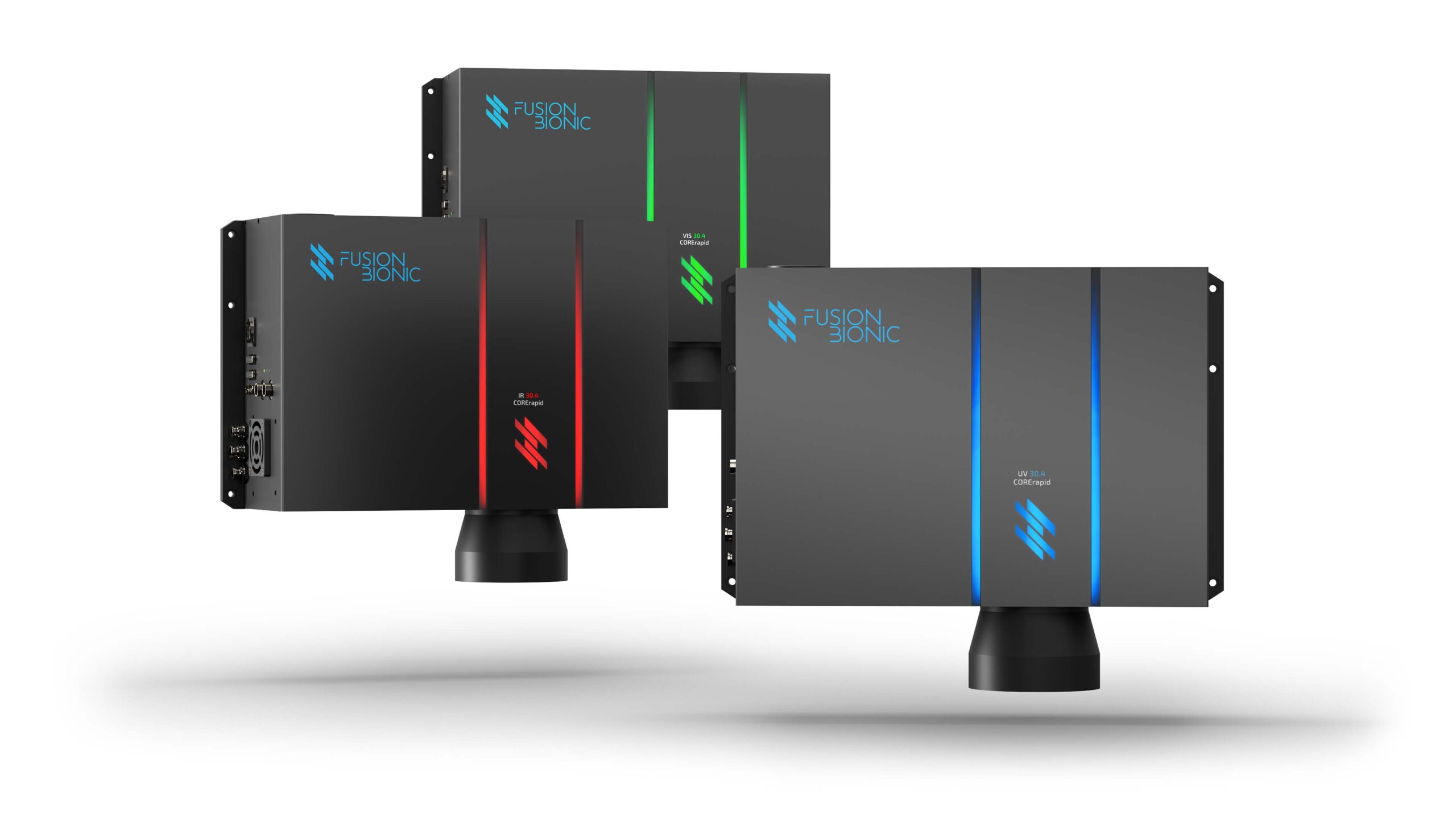
Highly flexible interference modules for 2- and 4-beam patterns, IR to UV.
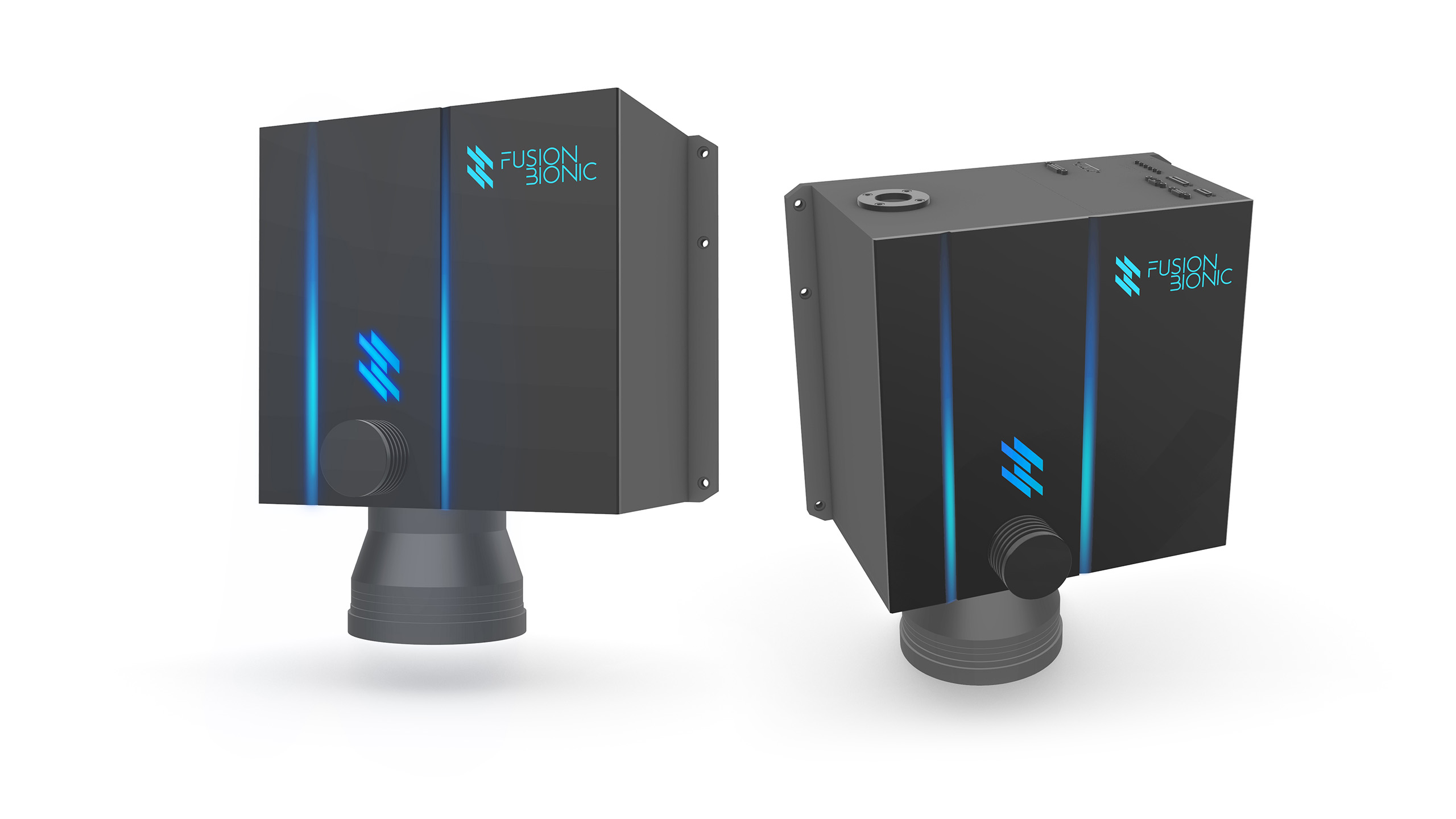
Scanner-based interference modules for high-speed texturing of larger areas.
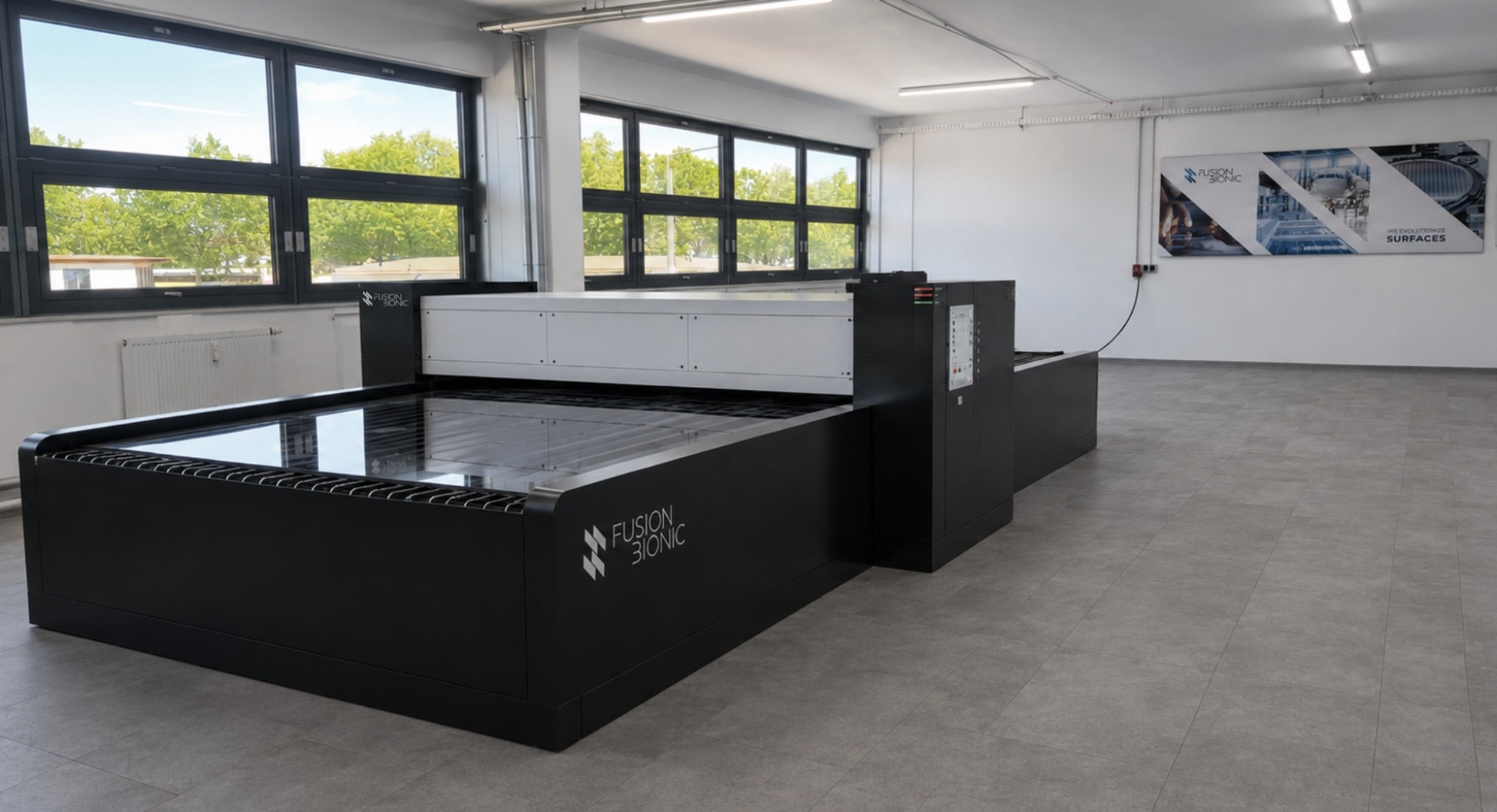
The next module generation. Specifications follow at launch.
With a EUR 8.2 million round in June 2026, Fusion Bionic moves from components to turnkey DLIP systems with inline quality assurance. Two large industrial projects bring the process to photovoltaic glass.
Functional micro-structures textured directly into the skin instead of coatings or foils, with less de-icing energy and maintenance.
Anti-icing · noiseLower friction and wear, longer lubricant life and lower contact resistance on electrical connectors.
Friction · contactsBetter implant biocompatibility, tailored wetting, non-stick and antibacterial functions on components.
BiocompatibilitySolar glass, semiconductor and consumer electronics parts where light, water and dirt need to behave.
Light · self-cleaning“Fusion Bionic has great and exciting technology that will help us solve future product challenges related to material surfaces.”
Thomas StengerHead of Business Segment Functional Materials, Heraeus Precious Metals
“Thanks for the excellent cooperation in integrating their CORE solution based on Direct Laser Interference Patterning into our GL.evo machine.”
Florian LendnerManaging Director, GFH GmbH
“Adding Fusion Bionic’s CORE solution extends our Applied Photonics Center towards the micron and sub-micron scale.”
Dr. Rigo PetersManaging Director, SLV Mecklenburg-Vorpommern
Fusion Bionic was founded in April 2021 after ten years of joint DLIP research by Fraunhofer IWS and TU Dresden. The team brings more than 20 years of experience in laser surface functionalisation.
Winner of the Fraunhofer Founder Award 2024. Seed round led by Stream Capital with TGFS, MBG and SBG; partner in Japan: MOL Solutions Inc.

We test your material in our Dresden application centre and show which structure delivers the function, at which speed.